
Eyewear MOQ explained: from private label to custom design
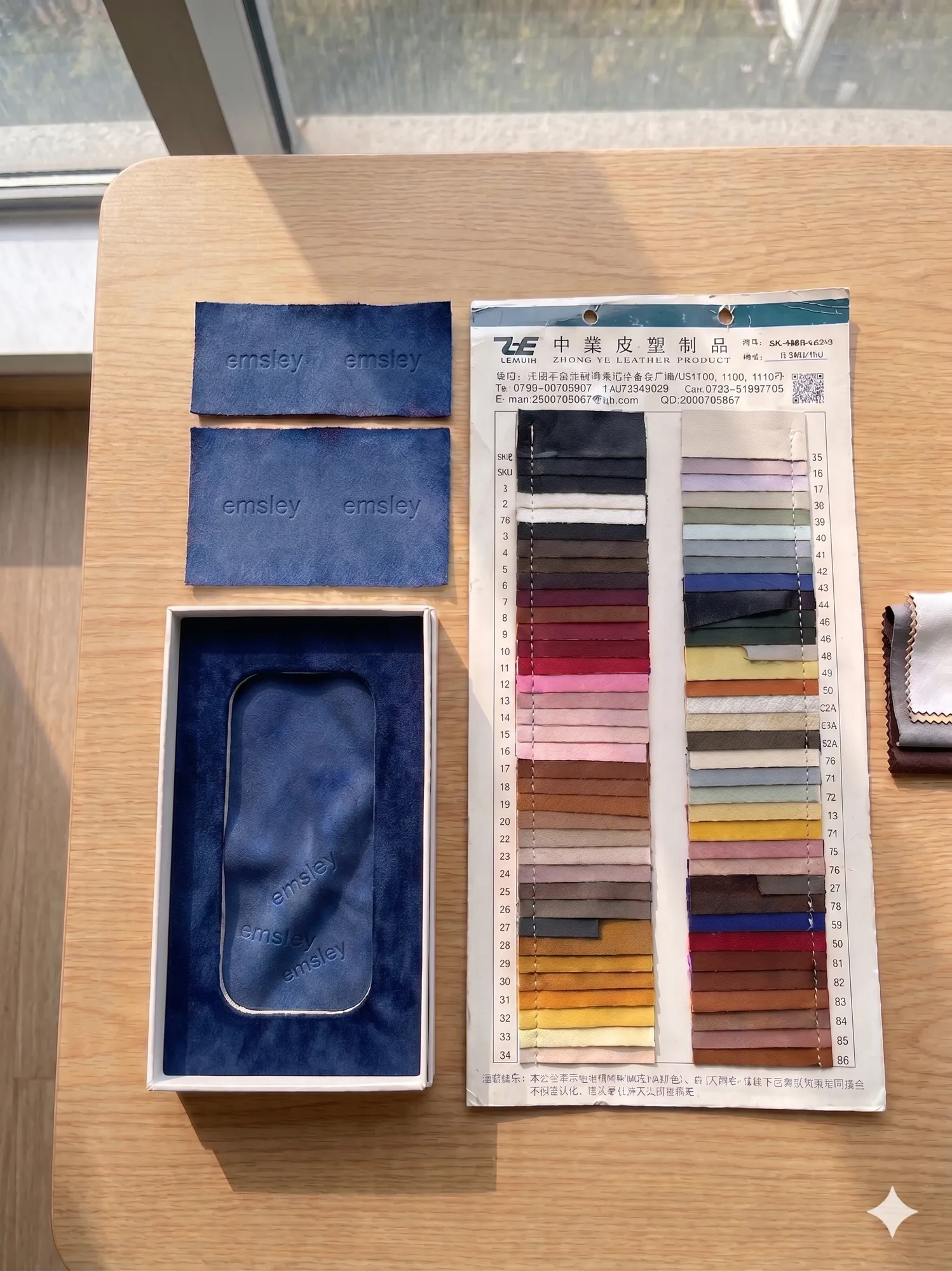
For a fashion brand adding sunglasses, or a retailer developing its own line, a small first order has an obvious appeal. It limits the stock commitment while you learn what customers will actually wear.
The useful question is how much development that order needs to carry. Adding a logo to an existing frame, adapting an established design and developing a new frame involve different work. They can also come with different minimum order quantities, or MOQs.
Before comparing suppliers, decide which parts of the product need to be distinctive and where an existing solution would serve the collection well.
Three routes, with different room to move
Private-label eyewear
In a straightforward private-label arrangement, you select an existing frame and apply your branding. The available choices might include stock colours, lenses, logo placement and packaging.
This can suit a retailer testing an own-label offer or a brand whose customers want an accessible addition to an existing wardrobe. The frame already exists, so the project may involve less development than a new design.
Ask what is genuinely available, rather than assuming every catalogue option can be combined. Check whether other businesses can buy the same design. Branding an existing frame does not, by itself, make the shape exclusive.
Adapting an existing design
Between stock selection and a new frame sits a useful middle ground: starting with an established construction and changing selected details.
Those changes might concern colour, finish, lenses or temple details. Their feasibility depends on the starting frame and production method. A change that looks minor in a sketch may affect components, fit or manufacturing work.
Request a precise description of what changes, what stays fixed and whether each change creates a separate development charge or minimum. Suppliers use terms such as “semi-custom” differently, so the specification matters more than the label.
Custom eyewear development
A custom project starts with the intended wearer and a design brief, with greater scope to determine shape, proportions, fit and detailing.
It can involve new technical drawings, prototypes, production preparation and, depending on the construction, dedicated tooling. Those costs and activities need to be accounted for even when the production order is small.
Custom development makes sense when the frame itself needs to express something recognisable about the brand. It requires agreement on development scope, approvals, design rights and any exclusivity, rather than an assumption that the word “custom” settles those questions.
What does the minimum actually apply to?
An MOQ is incomplete without a unit of measurement. A supplier might quote a minimum for the whole order, each frame style, each colour or a particular component.
For illustration only, imagine a minimum of 100 pairs per colour. Two styles in three colours each would require 600 pairs, even if your initial plan was a 300-pair collection. These numbers are hypothetical, not Emsley order terms.
Ask for the quantity structure in writing:
- Total pairs across the order
- Pairs per style and size
- Pairs per colour and lens combination
- Separate minimums for custom hardware or materials
- Minimums for cases, cloths, boxes and printed inserts
- Minimums and conditions for repeat orders
A frame order can fit your budget while its packaging leaves you holding surplus stock. If components have different minimums, agree who owns the balance, where it will be stored and how it can be used later.
Reduce the assortment before weakening the product
A focused collection can be a better starting point than spreading the same budget across many lightly differentiated options.
Choose a clear role for each style. One might serve a familiar everyday fit; another might carry the collection's more distinctive silhouette. Give each colour a reason to exist, based on your customers and the wider range.
Then ask which elements can be shared. A common case, cloth or packaging format may simplify the order. Stock material colours or established hardware may be worth considering where they do not compromise the intended result.
These are points to discuss, not guaranteed routes to a lower minimum. The supplier still needs to confirm what is workable for the specification.
Compare the whole commitment
The smallest order is not automatically the least expensive way to learn. Compare development charges, sampling, unit prices, packaging quantities and delivery costs together.
Also consider what the test will tell you. If fit, finish or presentation differs substantially from the product you eventually want to sell, customer response may give you an incomplete answer.
Before approving production, inspect representative samples and record the agreed specification. Clarify how quality will be checked, what happens if delivered goods do not match approval, and what support or spare components are available. A small order still needs a clear acceptance process.
A brief that gets a useful answer
Send prospective partners enough detail to assess the project:
- Your brand, target wearer and intended sales channels
- Reference images, with the specific qualities you want to explore
- The number of styles, colours and pairs you are considering
- What must be original and where you can be flexible
- Intended retail positioning and available project budget
- Lens, branding, case and packaging expectations
- Destination markets and the date you hope to have stock
Ask them to identify the viable development route, quantity constraints and unresolved decisions. That gives you a basis for comparing proposals without treating unlike products as equivalent.
At Emsley, we consider frames, lenses, cases, packaging and logistics together. If you are deciding how much to develop for a first collection, send us a note with your references and intended range, or read about our process.