
How to plan eyewear packaging before production
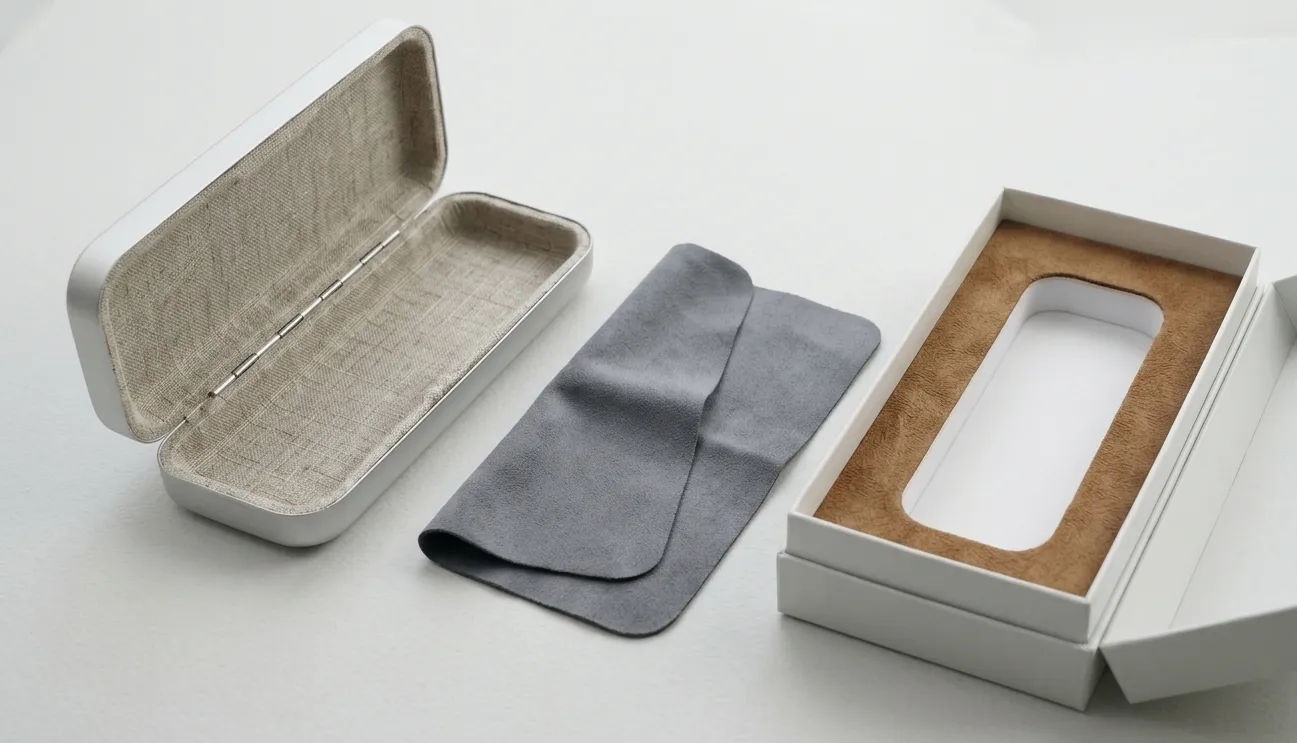
Eyewear packaging needs its own production brief. Before approving a case, decide which frames it must hold, what belongs in each set, how the branding will be applied and how the finished product will reach the customer.
For a fashion brand or retailer, these decisions sit alongside frame development. A slim case may suit the brand beautifully and still fail to accommodate a larger silhouette. A presentation box may look right on a studio table but need a different outer pack for online orders.
Planning the complete set early gives your team something specific to sample, cost and approve.
Start with the frame and the sales channel
Use physical frame samples to establish the case requirements. Record the dimensions of each model when folded, then check the widest, tallest and deepest combinations. A shared case should be assessed with every model it is intended to hold.
Look beyond whether the lid closes. Check how the frame sits, whether the temples or lenses press against the interior, whether it moves excessively and how easily a customer can remove it. Repeat the check with the cloth or pouch included if that is the intended arrangement.
Then describe the route to the customer. A store team handing over a boxed pair has different packing needs from a fulfilment centre dispatching individual online orders. If the collection will use both channels, identify which components are shared and which are channel-specific.
Give every component a job
Write a component list before asking for quotations. Depending on the collection, it might include:
- A protective case for everyday storage
- A soft pouch, if it has a distinct purpose within the set
- A cleaning cloth suitable for the specified lenses
- A presentation box or sleeve
- A care card and any required product information
- Protective transit packaging for the sales channel
Specify the quantity of each item per pair. Decide whether the pouch is an alternative to the case or an additional component. Ask the lens supplier to confirm the intended cloth and care instructions rather than choosing them on appearance alone.
This list becomes the basis for like-for-like costing. It also exposes omissions: a quote for a branded case tells you little about the cost of a complete, assembled retail set.
Specify materials and finish in terms a supplier can use
A reference image can communicate an aesthetic, but it cannot settle construction. For the case, record the outer material, internal structure, lining, closure, edge finish and colour reference. For a pouch or cloth, include dimensions, fabric specification, finishing and artwork placement.
Be precise about material descriptions. If a proposed surface is PU-coated fabric, have the supplier identify it that way in the specification. If a particular material or environmental attribute matters to the brand, ask what documentation supports it before using that claim in customer-facing copy.
For boxes and sleeves, request the proposed board construction, dimensions, surface finish and assembly method. Review physical swatches and samples. A photograph cannot fully show texture, opening resistance or the way a finish marks during handling.
Treat the logo as a production decision
Printing, debossing, foil and other treatments create different results on different surfaces. Ask the supplier which methods suit the selected material and request a sample of the actual combination.
Supply production artwork and define logo size, position and orientation. Agree how colour will be approved, including which physical reference takes priority over a screen preview. Establish acceptable placement and finish tolerances before production.
Check the complete set together. The same artwork on a case, cloth and box will not necessarily look identical. Decide which differences are acceptable and which need correction, then record that decision.
Align quantities and approval dates
Ask what the minimum order applies to for every component: construction, material, colour, logo treatment or total order. A frame quantity does not automatically establish the minimum for a custom case or printed box.
A common packaging set across several models may simplify the order, provided fit and brand presentation remain suitable. Ask how substitutions, spare components and reorders would be handled, and who would hold any agreed excess stock.
Build packaging milestones into the collection plan. Give artwork, material approval, physical sampling, production and assembly their own dates. Confirm dependencies with the suppliers rather than assuming packaging can begin after the frames are finished.
Approve the assembled set and the packing method
Review an assembled sample with the intended frame, accessories, printed information and outer packaging. Check it against the written specification and keep a dated approval record with photographs and a retained reference sample where practical.
Separate appearance approval from transport checks. Ask the supplier and fulfilment provider what testing is appropriate for the actual shipping route. Agree what would count as unacceptable damage to the product and packaging, and who reviews the results.
Before release, document the packing sequence, component count, SKU identification, barcode placement where needed, carton quantities and delivery destination. Confirm which team assembles the set and which checks it. A warehouse should be able to identify and handle the shipment without reconstructing the packing plan.
Bring the packaging brief into the first conversation
You do not need every finish resolved before speaking to a development partner. Start with frame references, sales channels, intended set contents, a packaging budget and the decisions still open.
Emsley integrates frames, lenses, cases, packaging and logistics through one team. If you are planning a collection, bring those requirements into the conversation so the packaging can develop alongside the product.